Call or text 321-252-8640
Japanese Knife Styles
Let's take a look at the different types of commonly used Japanese knives
7/2/20263 min read
Different Styles of Japanese Kitchen Knives
Japanese kitchen knives have earned a worldwide reputation for their exceptional sharpness, precision, and craftsmanship. Japanese knives are often created for specific cutting techniques and ingredients. Choosing the right knife can make food preparation faster, easier, and more enjoyable.
Whether you're a home cook or a professional chef, understanding the most common Japanese knife styles can help you select the perfect blade for your kitchen.
Gyuto – The Japanese Chef's Knife
The Gyuto is the Japanese equivalent of a Western chef's knife and is one of the most versatile knives available. It excels at slicing, dicing, chopping, and mincing vegetables, meats, and herbs.
Typical blade lengths range from 180mm to 270mm, with 210mm being the most popular for everyday use. Its thinner blade and harder steel allow for cleaner cuts and excellent edge retention.
Best for:
Meat
Vegetables
Herbs
General kitchen use
Santoku – The Everyday Favorite
Santoku means "three virtues," referring to its ability to handle meat, fish, and vegetables equally well. With a shorter blade and flatter edge than a Gyuto, it's especially comfortable for home cooks who prefer a compact knife.
The Santoku is ideal for push-cutting and slicing, making it one of the most popular Japanese knives worldwide.
Best for:
Daily meal preparation
Vegetables
Boneless meats
Fish
Bunka – The Precision Workhorse
The Bunka features a distinctive reverse tanto (K-tip) point that provides exceptional control for detailed cutting tasks. It combines the versatility of a Santoku with enhanced precision for intricate work.
Its aggressive tip makes it excellent for scoring vegetables, trimming meats, and delicate slicing.
Best for:
Fine vegetable work
Precision slicing
Meat trimming
Detailed prep
Nakiri – The Vegetable Specialist
If vegetables are the star of your cooking, the Nakiri is hard to beat. Its rectangular blade allows the entire edge to contact the cutting board, producing perfectly clean cuts without rocking.
The thin blade glides effortlessly through everything from onions and carrots to cabbage and herbs.
Best for:
Vegetables
Herbs
Fruits
Petty – The Utility Knife
A Petty knife is the Japanese version of a utility knife. Usually measuring between 120mm and 150mm, it's perfect for smaller tasks where a full-size chef's knife feels cumbersome.
It's an excellent choice for peeling fruit, trimming meat, slicing garlic, or preparing garnishes.
Best for:
Fruit
Small vegetables
Garnishes
Precision work
Sujihiki – The Slicing Expert
Designed specifically for slicing, the Sujihiki has a long, narrow blade that creates smooth, single-pass cuts through meat and fish.
Its design minimizes drag and preserves the appearance and texture of the food.
Best for:
Roasts
Brisket
Ham
Fish fillets
Yanagiba – Traditional Sushi Knife
The Yanagiba is one of Japan's most iconic knives. Traditionally single-beveled, it is designed to slice raw fish for sushi and sashimi with incredibly clean cuts.
Its long blade allows chefs to complete each slice in one smooth motion, protecting the delicate texture of the fish.
Best for:
Sushi
Sashimi
Raw fish
Deba – Built for Fish Preparation
The Deba is a thick, heavy knife designed for breaking down whole fish. It easily handles cutting through fish heads and small bones while still providing excellent control for filleting.
Although robust, it should not be used like a cleaver on large bones.
Best for:
Whole fish
Filleting
Poultry breakdown
Honesuki – Poultry Specialist
The Honesuki is purpose-built for deboning chickens and other poultry. Its stiff triangular blade easily follows joints and bones while minimizing meat waste.
Many chefs also use it for trimming proteins due to its outstanding control.
Best for:
Chicken
Turkey
Duck
Meat trimming
Kiritsuke – The Professional's Choice
The Kiritsuke combines features of both the Gyuto and Yanagiba. Traditionally reserved for experienced chefs, it offers outstanding versatility but requires refined knife skills.
Its elegant profile and K-tip make it one of the most recognizable Japanese knives.
Best for:
Professional kitchens
Precision slicing
Vegetables
Fish
Choosing the Right Japanese Knife
For most home cooks, one of these three knives will handle nearly every kitchen task:
Gyuto – The most versatile all-around knife.
Santoku – Compact, easy to control, and excellent for everyday cooking.
Nakiri – The ideal choice if you prepare lots of vegetables.
As your skills and cooking interests grow, adding specialty knives like a Petty, Sujihiki, or Yanagiba can make food preparation even more efficient and enjoyable.
Caring for Japanese Knives
Japanese knives are designed to deliver incredible performance, but they also deserve proper care.
To keep your knife performing at its best:
Hand wash and dry immediately after use.
Never place it in the dishwasher.
Use quality wood, soft plastic, or elastomer/rubberized cutting boards.
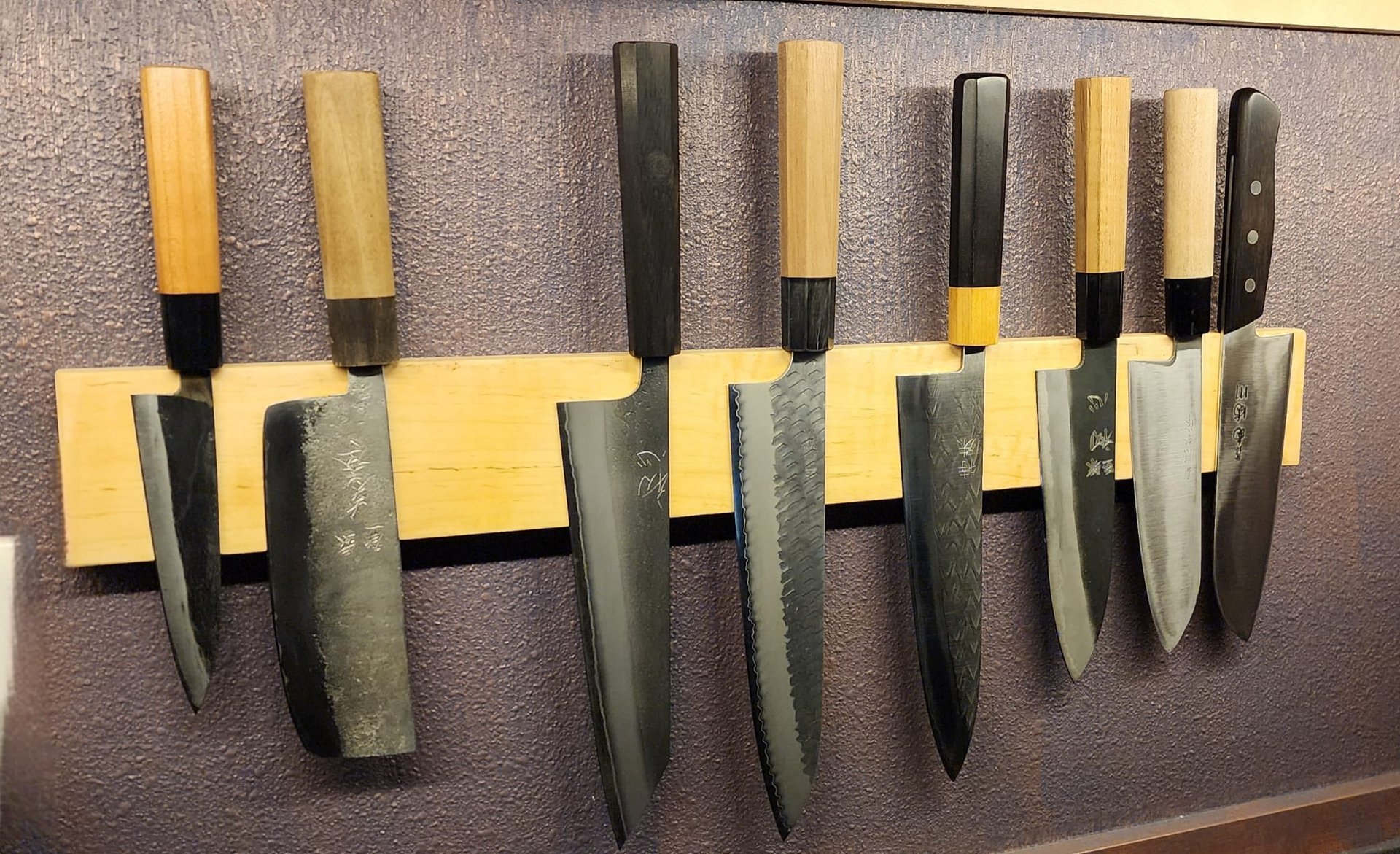
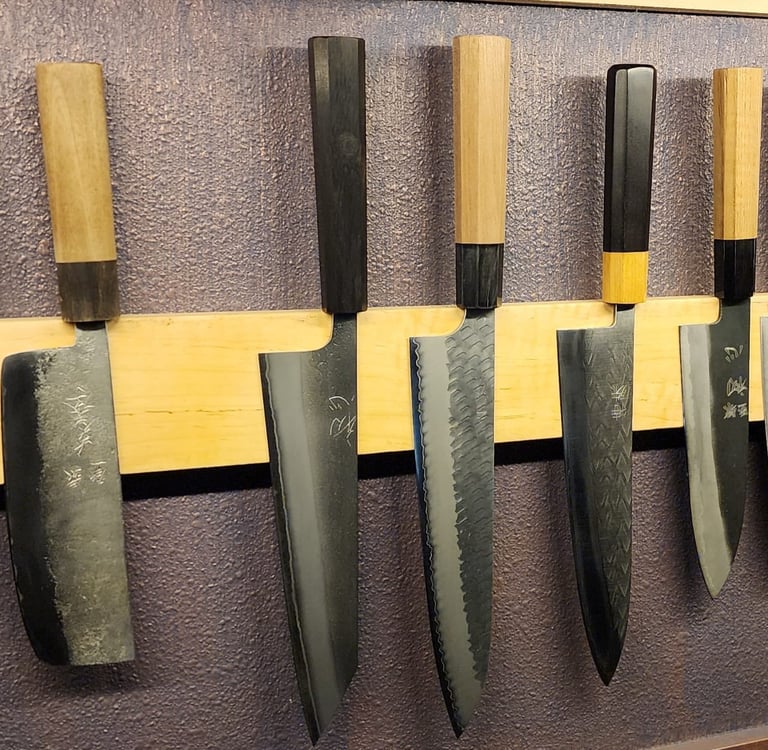
Some people recommend storing them in a knife block or a saya. Personally, I do not. The blade always rubs the edge of the opening on a knife block, and both the knife block and the saya can hold moisture. I recommend a knife bar mounted on the wall, or a drawer insert that has cork sheets that separate the blades.
With proper maintenance, a quality Japanese knife can provide decades of exceptional performance while becoming one of the most valued tools in your kitchen.
At Space Coast Sharpening, we appreciate the craftsmanship behind Japanese cutlery. Whether you own a handcrafted carbon steel Gyuto or a stainless Santoku, proper sharpening preserves the geometry, edge, and performance that make these knives so special. A professionally maintained Japanese knife isn't just sharper—it performs exactly as its maker intended.