Call or text 321-252-8640

Japanese Steels vs. European Steels: A Kitchen Knife Showdown
7/9/20261 min read
Understanding Japanese Steels
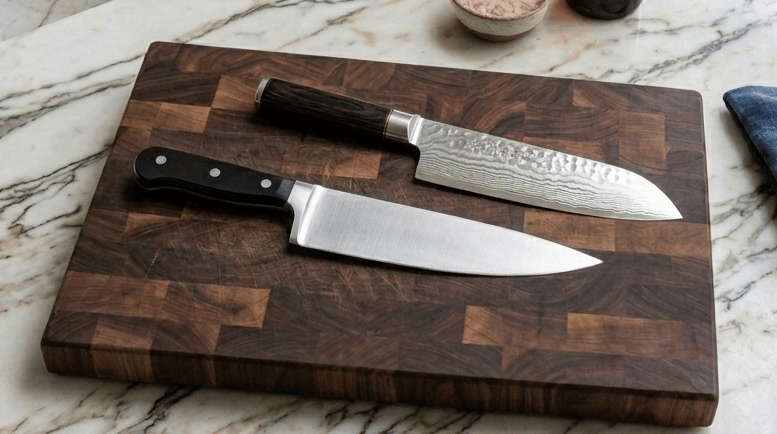
When it comes to kitchen knives, Japanese steels are renowned for their exceptional sharpness and cutting performance. The traditional Japanese knife-making process often utilizes high-carbon steels, which are known for their ability to hold an edge longer than most. A popular choice among chefs is VG-10 steel, often found in high-quality knives. It’s a proprietary blend that combines great hardness with decent corrosion resistance, making it perfect for professional and home cooks alike.
Diving into European Steels
On the other hand, European steels, such as those used in German knives, emphasize durability and ease of maintenance. They often use alloys such as DIN 1.4116 or 440C, which contain additional elements to enhance toughness and rust resistance. This means that while they may not achieve the razor-like sharpness of their Japanese counterparts, they are forgiving for the average home chef. European knives tend to be heavier and thicker, making them more versatile for various kitchen tasks, from cutting to chopping.
Which One Should You Choose?
The choice between Japanese steels and European steels really comes down to your cooking style and what you value in a kitchen knife. If you appreciate precision, finesse, and the art of sushi-making, you’ll likely lean towards the Japanese options. Alternatively, if you prefer a sturdier knife that can handle a variety of tasks, European steels could be your best bet.
It’s also worth noting that both types of steel can deliver amazing results if properly cared for. Regular honing and the right sharpening techniques are essential. So, whether you are a sushi chef or a home cook who enjoys preparing hearty meals, understanding the differences between Japanese and European steels will help you make an informed choice.
Both Japanese and European steels offer unique advantages, and neither one is inherently better. It boils down to personal preference and how you intend to use your knife. Finessed cuts? Go Japanese. Versatile durability? European steels have you covered.